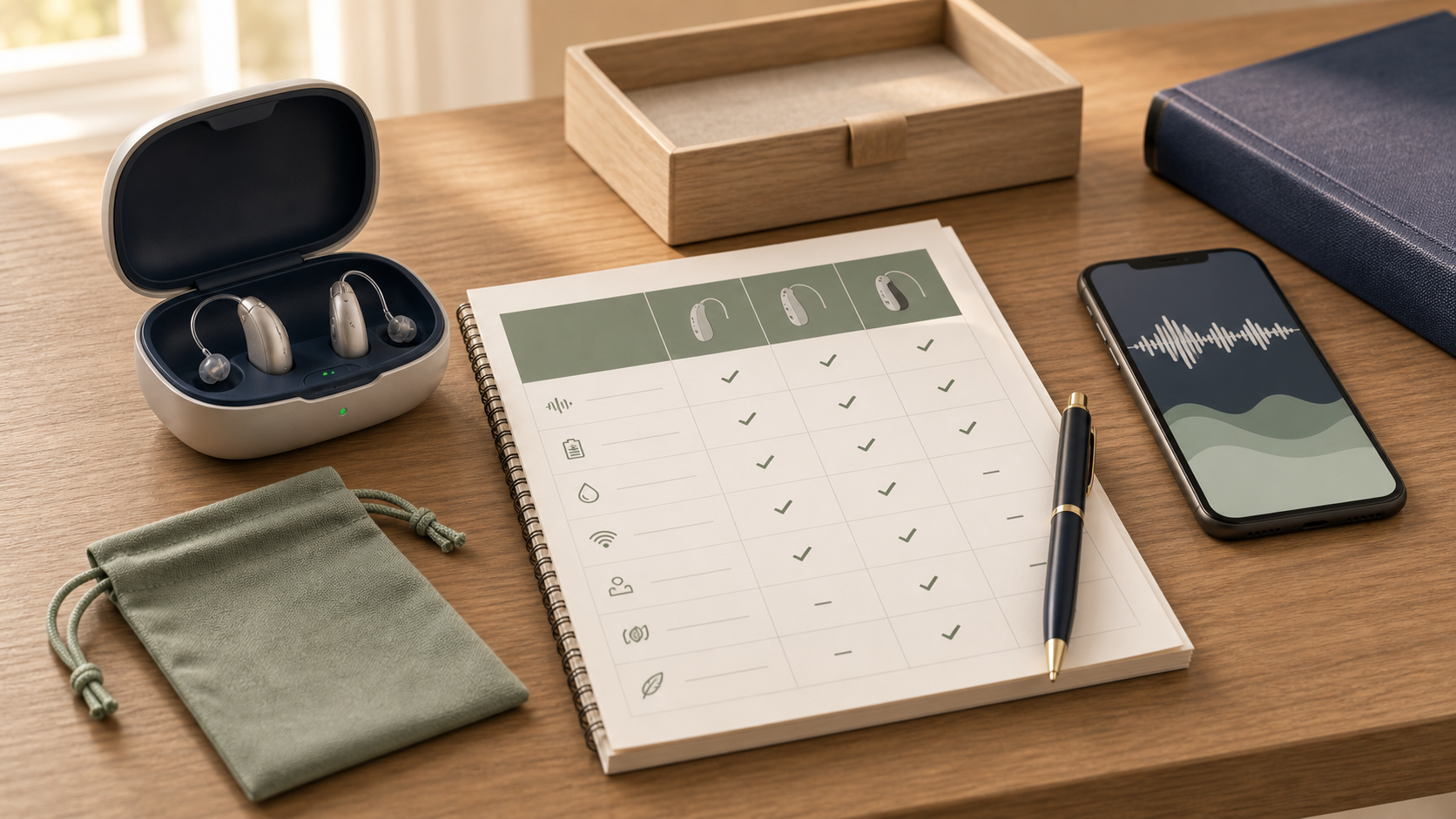
OTC hearing aids can be worth it for mild to moderate hearing trouble
Over-the-counter hearing aids are intended for adults with perceived mild to moderate hearing loss. That might look like turning up the TV, missing parts of conversations, or struggling in restaurants while still hearing reasonably well in quieter settings.
For someone in that range, an OTC hearing aid can be a less expensive way to try help without starting with a full clinic purchase.
They are not the right starting point for every senior
A hearing aid is not a diagnosis. If hearing changed suddenly, is much worse in one ear, or comes with pain, dizziness, drainage, or severe ringing, it is time for medical or hearing-professional guidance.
- Hearing loss came on suddenly
- One ear is much worse than the other
- There is ear pain, drainage, dizziness, or severe ringing
- The person cannot understand speech even when it is loud
- Setup through an app or tiny device controls would be frustrating
The price may be lower, but read the full cost
OTC devices can cost much less than many prescription hearing aids. But the full cost includes more than the sticker price.
- Return window and restocking fees
- Warranty length
- Replacement domes, tips, filters, or chargers
- Whether support is included
- Whether the device can be adjusted easily after the first week
Original Medicare generally does not cover hearing aids or exams for fitting hearing aids. Some Medicare Advantage plans may offer hearing benefits, so check the plan before buying.
Features that matter in real life
The best hearing aid is not always the most advanced one. It is the one the person will actually wear, charge, clean, and adjust.
- Rechargeable battery or replaceable batteries
- Behind-the-ear or in-canal style
- Volume and program controls
- Smartphone app requirements
- Customer support by phone or chat
- Trial period long enough to test real situations
A sensible way to try OTC hearing aids
Before ordering, write down three listening situations that matter most. Maybe it is hearing a spouse at dinner, following a doctor appointment, understanding church announcements, or keeping up with grandchildren.
During the trial period, test those exact situations. If the device only helps in quiet rooms but fails where life actually happens, keep looking.