Our pick if you need a place to start
If we were helping a parent compare OTC hearing aids today and they were comfortable using a phone app, we would start with Jabra Enhance Select 700 on Amazon.
The reason is support. OTC hearing aids are only useful if the person can get them set up, adjust them, and keep wearing them. Jabra is not the cheapest option, so we would still compare Lexie B3 and Audien Atom One if price matters most. As an Amazon Associate, Retire Clear earns from qualifying purchases.
Start with the hearing problem, not the device
Over-the-counter hearing aids are meant for adults with perceived mild to moderate hearing loss. They can be bought without a prescription, medical exam, or audiologist fitting. That can be convenient, but it also means the buyer has to be honest about whether the problem is simple enough for a self-fit device.
Prescription hearing aids may be a better fit for more significant hearing loss, confusing symptoms, or anyone who would benefit from in-person testing and follow-up care. Original Medicare generally does not cover hearing aids or fitting exams, so return policies, trial periods, payment plans, and support matter more than the headline price.
When not to start with a mail-order or OTC device
- Sudden hearing loss or a fast change in hearing
- Hearing loss in only one ear
- Ear pain, drainage, dizziness, or ringing that is new or severe
- A history of ear surgery, ear injury, or chronic ear problems
- Severe hearing loss or difficulty understanding speech even when sound is loud
- Confusion about whether the issue is hearing, memory, medication, or another medical concern
A hearing aid can make sound easier to hear, but it does not explain why hearing changed. A professional hearing test can also prevent a very common frustration: buying a device that does not match the person's actual hearing pattern.
A practical way to compare popular options
| Option | Best fit | Approximate cost to check | Support and return notes |
|---|---|---|---|
| Jabra Enhance Select 700 on Amazon | OTC buyers who want remote support and rechargeable behind-the-ear models | Often premium-priced; check current Amazon price and return window | Good first comparison for support; requires comfort with remote setup and app-based adjustments |
| Eargo 8 on Amazon | People who want a nearly invisible in-canal OTC style | Often premium-priced; check current Amazon price and return window | Small design can be appealing, but tiny devices can be harder to handle |
| Lexie B3 on Amazon | Budget-conscious OTC shoppers who want app-guided setup | Midrange OTC pricing; check current Amazon price and return window | App-guided setup can help; confirm support and whether the style fits comfortably |
| Sennheiser All-Day Clear on Amazon | People who want familiar electronics/audio brands | Often premium-priced; check current Amazon price and return window | Recognizable audio brand; support may differ by retailer |
| Audien Atom One on Amazon | Low-cost OTC shoppers comparing entry-level devices | Usually one of the lower-cost options to compare; check current Amazon price | Lower cost may mean fewer features or less individualized support |
| Local audiologist or hearing clinic | People with complex hearing needs or who want in-person care | Professional hearing test, fitting, programming, follow-up, and repairs | Usually costs more; ask what services are bundled and what fees are nonrefundable |
Retail examples to compare include Jabra Enhance Select 700 OTC hearing aids on Amazon, Eargo 8 OTC hearing aids on Amazon, Audien Atom One OTC hearing aids on Amazon, ELEHEAR Beyond OTC hearing aids on Amazon, Lexie B3 OTC hearing aids on Amazon, and Sennheiser All-Day Clear OTC hearing aids on Amazon. As an Amazon Associate, Retire Clear earns from qualifying purchases.
Jabra Enhance: Best for remote support
Jabra Enhance is worth a look if you want OTC hearing aids but do not want to be completely on your own. Remote support, rechargeable models, and a longer home trial can make the process feel less like a one-shot purchase.
It may be a good middle ground for someone who wants more help than a bargain device, but is not ready to start with a traditional clinic purchase.
Compare Jabra Enhance Select 700 on AmazonEargo: Best for discreet in-canal design
Eargo focuses on small, rechargeable hearing aids that sit inside the ear canal. That can appeal to people who feel self-conscious about behind-the-ear devices.
The tradeoff is handling. Tiny devices can be harder to insert, remove, clean, and adjust, especially for someone with arthritis, tremor, or vision trouble.
Compare Eargo 8 on AmazonLexie: Best budget-friendly app-guided option
Lexie is a useful comparison for people who want app-guided setup and support while keeping the price below many premium OTC or prescription options.
The key question is not just cost. It is whether the person who will wear the hearing aids is comfortable using a phone app when the settings need attention.
Compare Lexie B3 on AmazonSennheiser: Best familiar audio-brand OTC option
Sennheiser may feel familiar to shoppers who already trust audio brands. That familiarity can be reassuring, especially when the hearing-aid aisle feels overwhelming.
Still, support matters more than the logo on the box. Before buying from any retailer, confirm who handles returns, warranty service, setup questions, and troubleshooting.
Compare Sennheiser All-Day Clear on AmazonAudien: Best for very low starting prices
Audien is worth comparing for someone who is price-sensitive and wants to understand the lower end of the OTC market before spending more.
Low price should not be the only deciding factor. Compare comfort, return policy, support, charging, volume controls, and whether the device is a true OTC hearing aid rather than a general sound amplifier.
Compare Audien Atom One on AmazonQuick picks
- Best first step for uncertain hearing loss: local hearing evaluation
- Best remote-support OTC path: Jabra Enhance Select 700 on Amazon
- Best discreet OTC style: Eargo 8 on Amazon
- Best budget-friendly OTC comparison: Lexie B3 on Amazon or Audien Atom One on Amazon
- Best familiar audio-brand comparison: Sennheiser All-Day Clear on Amazon
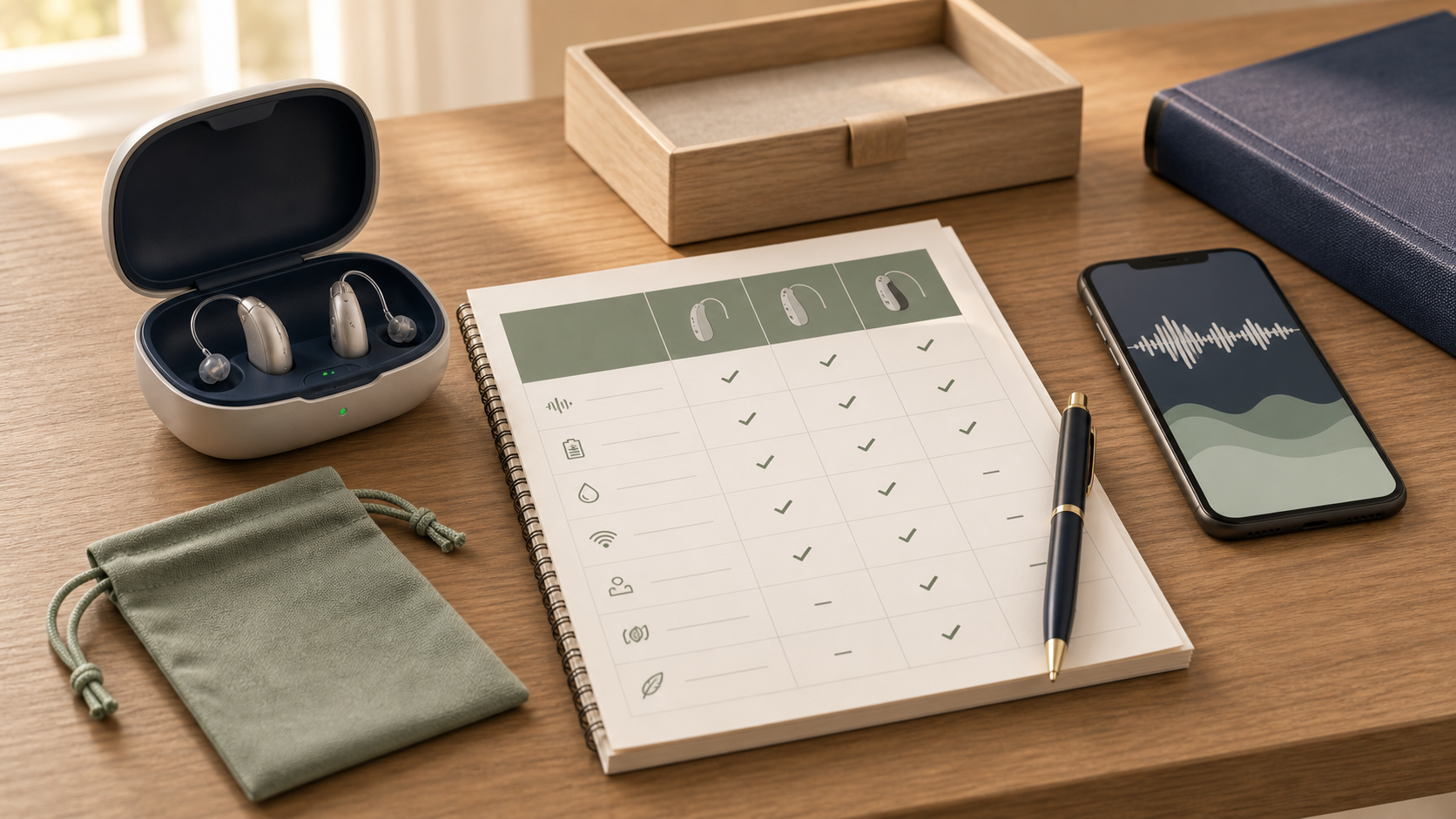
Before purchasing, write down where hearing is hardest: TV, phone calls, restaurants, church, doctor appointments, family conversations, or outdoor activities. A good choice should fit those real moments, not just look good in a comparison chart.